






NOTÍCIAS
What's the difference between Wheel loaders, telehandlers, skid steers?
Content
1. The Wheel Loader: Built for Mass, Power, and Fast Cycles
2. The Telehandler: Reach First, Dig Second
3. The Skid Steer: Zero-Turn Agility and Attachment Versatility
5. Wheel Loader Comparison at a Glance
7. Ready to Upgrade Your Loading Capacity?
Hauling the wrong machine to the site hurts. You blow the mobilization budget on fuel, watch cycle times crawl, or end up chewing up ground you promised the client you'd protect. On paper, a wheel loader, telehandler, and skid steer all move dirt and load pallets. However, on wet ground, stark differences in frame geometry and hydraulic power distribution dictate how each machine performs.
Pick the wrong one, and you'll burn more diesel than necessary, slow down your cycle time, or tear up the ground. Here is how they actually stack up where it counts.
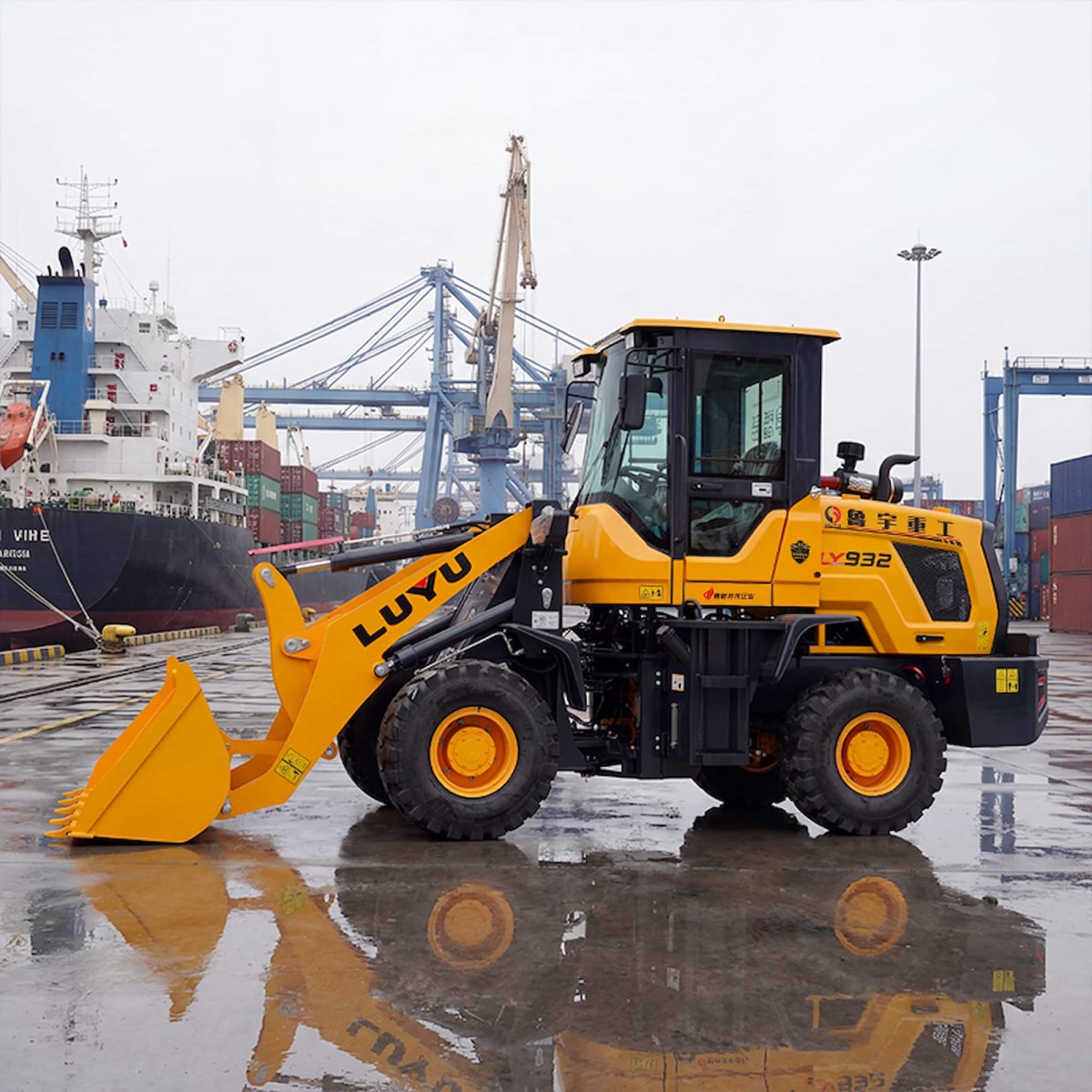
1. The Wheel Loader: Built for Mass, Power, and Fast Cycles
Need to move heavy dirt fast? A wheel loader is built for that job.
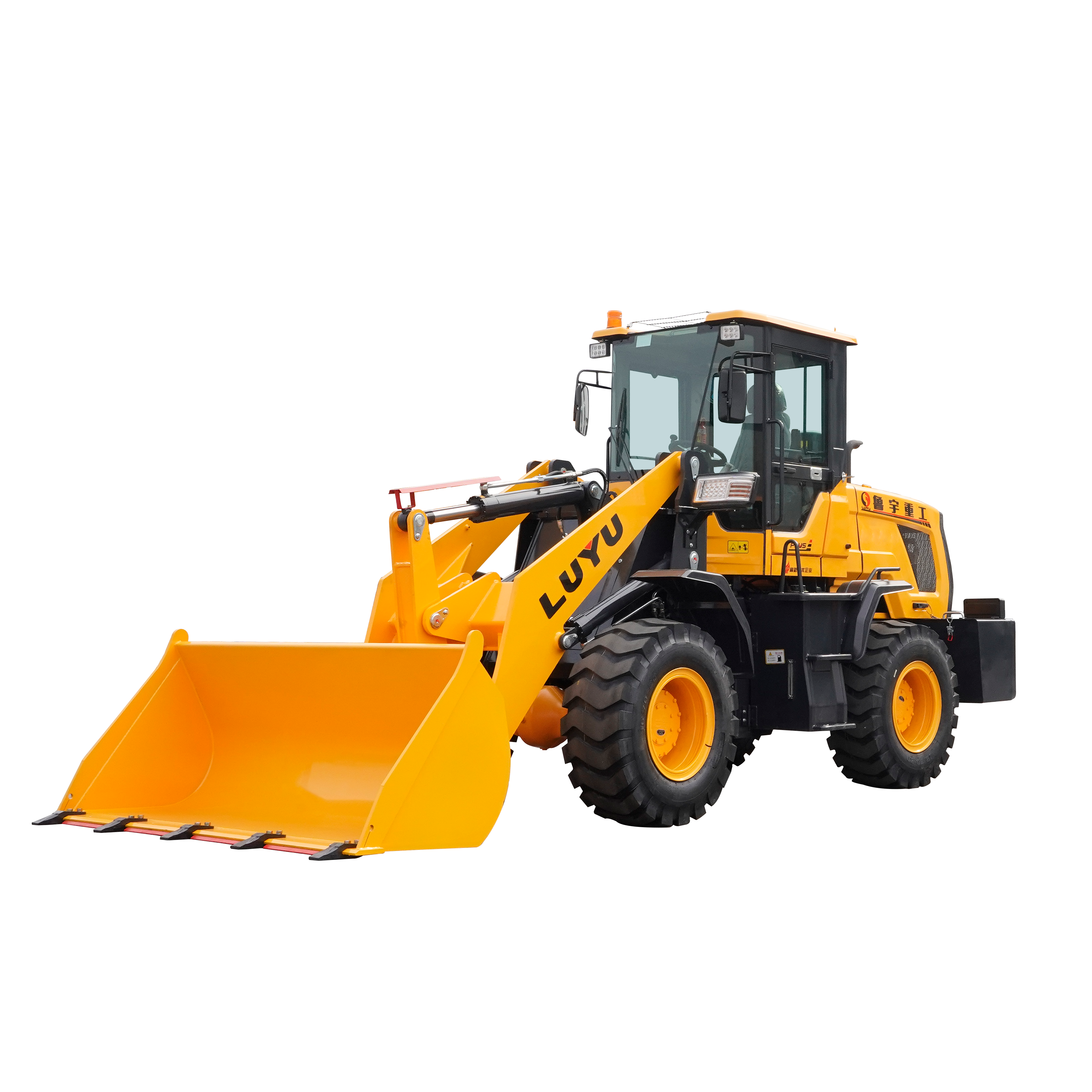
Its heavy-duty articulated frame doesn't just steer the front wheels—it bends in the middle. Because machine weight and hydraulic power provide strong bucket breakout force, operators can bite into stubborn aggregate piles without bogging down the transmission.
Where they excel: Loading bulk material, feeding a crusher, filling tall dump trucks, or sorting heavy stone.
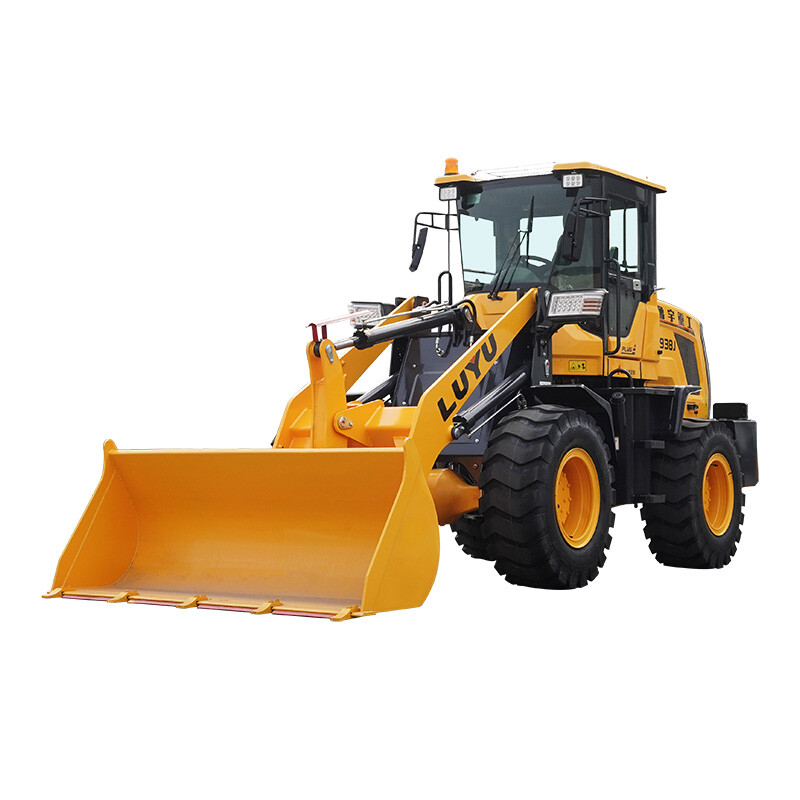
Going smaller: A compact wheel loader brings full-frame pushing force through narrow farm gates and crowded job sites, reducing the need of hauling oversized equipment.
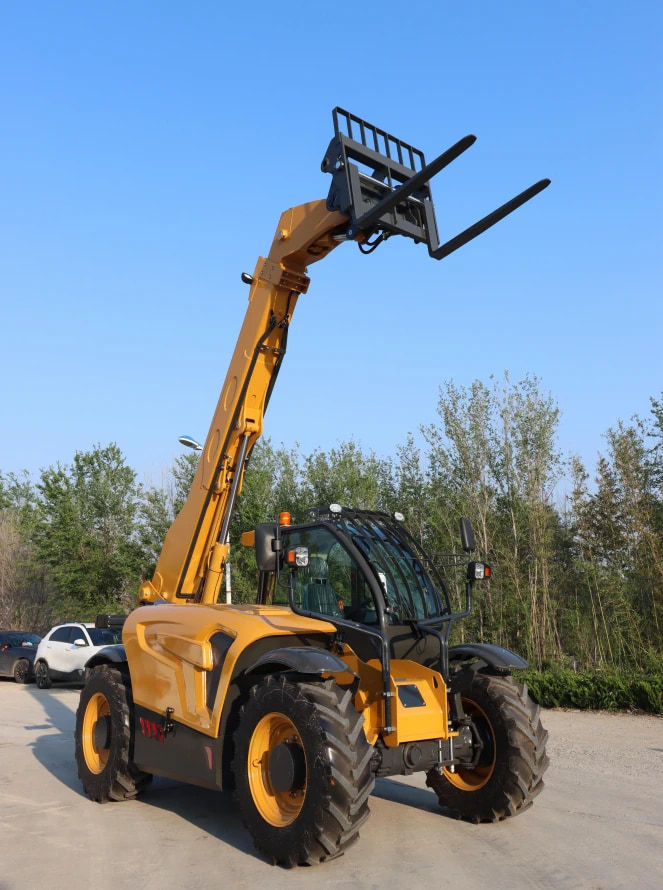
2. The Telehandler: Reach First, Dig Second
Think rough-terrain forklift meets a small crane. A telehandler hangs a telescopic boom off the back axle, trading digging muscle for vertical stretch.
You don't buy a telehandler to dig into packed earth. Buy it because you need to pluck a 2-ton pallet of concrete block and set it directly onto a second-story slab. Or reach clean over a boundary fence to unload a flatbed without shuffling site logistics.
Where it wins: Multi-story builds, agricultural stacking, placing materials right over obstacles.
The trade-off: Extending a boom shifts the machine's center of gravity quickly. Operators must watch their load charts closely, often setting down outriggers before lifting.
3. The Skid Steer: Zero-Turn Agility and Attachment Versatility
Skid steers turn by brute force: speed up the left wheels, slow down the right. Result? You pivot almost inside your own length.
That zero-turn trick makes it the king of residential backyards, crowded indoor demo, and alleyways where an articulated frame couldn't even swing a door open.
Where it wins: Tight enclosures, site cleanup, landscaping, and powering attachments like augers, trenchers, or hydro-demolition hammers.
Trade-off: Those wheels scrub across the ground to turn. On soft turf, you'll leave a signature. On hot asphalt, you'll eat tires for breakfast.
Key Direct Comparisons
Wheel Loader vs Skid Steer
Comparing a wheel loaderwith a skid steer comes down to space versus raw productivity. A wheel loader—even a compact wheel loader—will carry larger loads, load higher-sided dump trucks, and protect soft ground thanks to its smooth articulated turning. A skid steer, on the other hand, wins whenever space is extremely limited.
Wheel Loader vs Telehandler
When comparing a wheel loader with a telehandler, look at your vertical limits. A wheel loader is optimized for rapid, repeatable bucket cycles at ground level and standard dump heights. A telehandler trades off cycle speed and digging power for extreme vertical reach and forward outreach.
Wheel Loader Comparison at a Glance
How to Make the Call
So, which machine best fits your job?
Need to move massive tonnage fast? Stick with a wheel loader. It is usually the strongest option for bucket capacity, raw pushing force, and non-stop truck-loading speed on open ground.
Fighting height rather than weight? Choose a telehandler. It's your best bet when you have to hoist block pallets onto upper floors, reach right over site fences, or avoid a costly small crane rental.
Trapped in a tight-squeeze residential lot? Grab a skid steer. Zero-turn agility plus quick-attach hydraulics mean you'll auger, trench, or sweep without demolishing the gatepost.
Ready to Upgrade Your Loading Capacity?
If slow loading cycles and insufficient breakout force is reducing job-site productivity, check out the compact wheel loader lineup from LUYU Machinery.
Our machines pair heavy-duty articulated frames with responsive hydraulic systems and versatile attachment hitches. Whether you run a farm yard or a busy job site, LUYU equipment helps you move heavy material faster without breaking the bank on operating expenses.
👉Get in Touch with LUYU to get tailored machine specs and an instant quote!
Compartilhar para :


Etiqueta :
Consulta
Nosso gerente entrará em contato com você dentro de 30 minutos durante o horário de trabalho.
Produtos relacionados
 LY949 Carregadeira de rodas
Motor YN 90KW/122HP Carga nominal 2800kg Altura de descarga 3800mm Capacidade da caçamba 1.2m³  LY942 Carregadeira Compacta sobre Rodas
Tipo de Motor YN 76KW/103HP Carga nominal 2200kg Altura de despejo 3500mm Capacidade da caçamba 1m³  LY946 Mini Wheel Loader
Motor YN48T 92KW/123HP Carga nominal 2500kg Altura de despejo 3500mm Capacidade da caçamba 1.1m³  LY938 pá carregadeira
Motor YN27T 58KW/78HP Carga nominal 2000kg Altura de despejo 3500mm Capacidade da caçamba 0.8m³

Envie sua consulta